


All Products
-
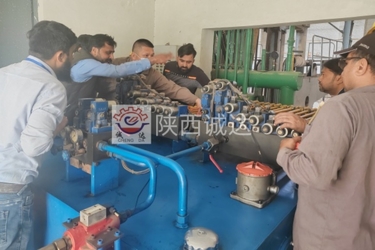 Syed Rashid Ahmed ButtShaanxi Chengda Industrial Furnace Co., Ltd. completed the commissioning of electric arc furnace, the workers carefully cooperated with Chengda engineers to learn and operate the equipment, showing the deep friendship and excellent cooperation between the people of China and Pakistan.
 -
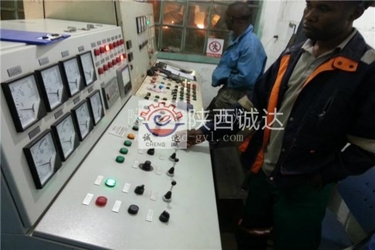 AboubacarAfter more than 1 month of intense production and debugging, 2 sets of heat exchange flue gas settling chamber equipment has been successfully put into operation ~ All the personnel involved in the project have worked hard! ~
 -
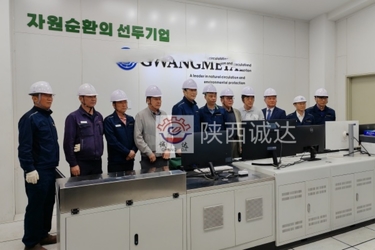 Ji-hwan【 Warm congratulations 】 Shaanxi Chengda Industrial Furnace Manufacturing Company in South Korea, North Chungcheong County precious metal smelting furnace equipment installation and careful manufacturing and strict commissioning, looking forward to the future in more fields to achieve mutually beneficial win-win cooperation!
Contact Person :
Du
Phone Number :
13991381852
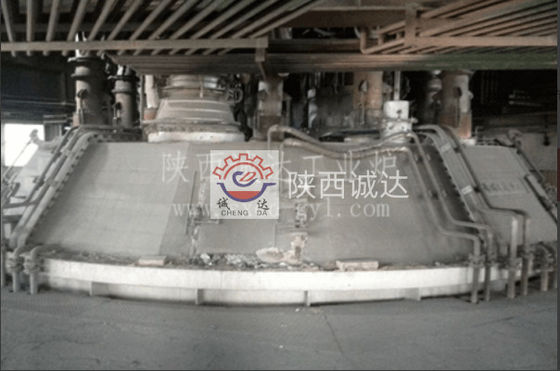
Hazardous Waste Treatment Chemical Slag Chromium Salt Slag at Domestic Leading Level/ Chrome salt residue treatment furnace

| Place of Origin | Shaanxi, China |
|---|---|
| Brand Name | Shaanxi Chengda |
| Certification | ISO 9001 |
| Model Number | Negotiate based on equipment processing capacity |
| Minimum Order Quantity | 1 unit |
| Price | The price will be negotiated based on the technical requirements and supply scope of Party A |
| Packaging Details | Discuss according to the specific requirements of Party A |
| Delivery Time | 2~3 months |
| Payment Terms | L/C,Western Union,T/T |
| Supply Ability | Complete production supply chain, supply on time, and meet quality standards |
Product Details
| Highlight | Innovative Chemical Slag,Hazardous Waste Treatment Chemical Slag,Chromium Salt Slag |
||
|---|---|---|---|
Product Description
| Smelting type | Production | kWh |
|---|---|---|
| Solid waste residue | 80--110t/day | 80--110t/day |
Harmfulness:
Chromium oxide compounds are widely used in industrial fields such as electroplating, metal processing, leather making, dyes, steel, and chemical engineering. Chromium salt slag is an industrial waste generated in the production of chemical enterprises, which poses certain hazards to humans and the natural environment, and is considered an important environmental pollutant.
Processing method: High temperature melting and separation treatment is adopted to achieve harmless treatment of hazardous waste, vitrification, and extraction and recovery of metal chromium alloy.
Main performance indicators of the equipment:
|
1 |
Daily slag processing volume |
80-110 t/day |
|
2 |
Daily recovery of chromium oxide |
26-30 t/day |
|
3 |
Electricity consumption per ton of product smelting |
4500~4800kwh |
|
4 |
Electric furnace capacity |
7000KVA |
|
5 |
Annual working days |
330 |
Equipment operation effect:
The 7000KVA special electric furnace is a new type of hazardous waste large-scale treatment equipment developed by our company based on the characteristics of chromium salt slag. It is the only successful industrial case in China.
The comprehensive technical capabilities of various performance indicators, process level, and intelligent control methods of the equipment have reached the leading level in China.
Chrome Salt Residue Treatment Furnace: Hazardous Waste Disposal & Resource Recovery Equipment
The chrome salt residue treatment furnace is a specialized thermal disposal device designed for the harmless treatment and resource utilization of chrome salt residue—a typical hazardous waste generated during chrome salt production (containing hexavalent chromium, a highly toxic and carcinogenic substance). The furnace adopts high-temperature thermal stabilization or reduction-solidification technology to convert soluble hexavalent chromium into insoluble trivalent chromium compounds, while realizing resource recovery of valuable components (e.g., chromium, sodium). It complies with national hazardous waste disposal standards (e.g., GB 18597-2001 in China, EPA regulations in the U.S.) and is widely used in the chrome chemical industry, metallurgical industry, and environmental protection engineering.
Core Working Principles
The furnace mainly adopts two technical routes for chrome salt residue treatment:
- High-Temperature Reduction Stabilization
- Feed chrome salt residue, reducing agents (coke powder, ferrous sulfate), and stabilizing agents (lime, bentonite) into the furnace. Under high-temperature conditions (1100–1300℃), toxic hexavalent chromium (Cr⁶⁺) is reduced to low-toxicity trivalent chromium (Cr³⁺), which reacts with stabilizing agents to form stable chromium spinel (MgCr₂O₄, FeCr₂O₃) that is insoluble in water and acid.
- Resource Recovery Pyrolysis
- For chrome salt residue with high sodium content, the furnace uses pyrolysis technology to separate sodium salts (e.g., Na₂CrO₄, Na₂SO₄) through high-temperature volatilization and condensation recovery, while the remaining slag is subjected to stabilization treatment for safe landfill or building material utilization.
Structural Design
| Component | Material & Specification |
|---|---|
| Furnace Body | Double-layer water-cooled jacket structure; inner lining with high-alumina refractory bricks + corundum castable (resistant to corrosion by molten slag and high-temperature gas); outer shell made of Q345R steel plate (thickness 16–20mm) |
| Feeding System | Sealed screw feeder + quantitative batching hopper; nitrogen sealing design to prevent leakage of toxic gas; feeding capacity adjustable (50–500 kg/h) |
| Combustion & Heating System | Natural gas/heavy oil burner + plasma arc auxiliary heating; temperature control accuracy ±10℃; supports staged heating (drying, preheating, high-temperature reaction) |
| Gas Treatment Unit | Built-in secondary combustion chamber (temperature ≥1100℃, residence time ≥2s) + bag filter + activated carbon adsorption tower; removes dust, acidic gas (HCl, SO₂), and residual Cr⁶⁺ in flue gas |
| Slag Discharge System | Water quenching slag discharge device; cools high-temperature slag to below 100℃ rapidly, forming stable granular slag; sealed design to prevent secondary pollution |
| Control System | PLC + touchscreen HMI; integrates temperature, pressure, gas composition monitoring, and automatic adjustment of feeding/burning parameters |
Technical Parameters
| Category | Parameter | Specification |
|---|---|---|
| Processing Capacity | Batch Type | 1–5 t/batch (suitable for small-scale enterprises) |
| Continuous Type | 5–50 t/d (suitable for large chrome salt production bases) | |
| Thermal Performance | Operating Temperature | 1100–1300℃ (adjustable according to residue composition) |
| Temperature Uniformity | ±15℃ (in furnace reaction zone) | |
| Heating Efficiency | ≥75% (adopts heat exchange technology to recover flue gas waste heat) | |
| Treatment Effect | Cr⁶⁺ Conversion Rate | ≥99.9% (residual Cr⁶⁺ in slag ≤0.1 mg/kg, meets landfill standards) |
| Slag Leaching Toxicity | Leachable Cr⁶⁺ ≤0.05 mg/L (complies with GB 5085.3-2007) | |
| Resource Recovery Rate | Sodium salt recovery rate ≥85%; chromium recovery rate ≥90% (for high-value residue) | |
| Operational Parameters | Fuel Type | Natural gas, heavy oil, or biomass pellet (optional) |
| Flue Gas Emission Standard | Dust ≤10 mg/m³; SO₂ ≤50 mg/m³; NOₓ ≤100 mg/m³ | |
| Cooling Water Parameters | Working pressure 0.3–0.5 MPa; flow rate 50–200 L/min; inlet temperature ≤35℃ | |
| Environmental & Safety Parameters | Protection Rating | Furnace body IP65; control cabinet IP54 |
| Explosion-Proof Grade | Ex d IIB T4 (for components in flue gas treatment system) | |
| Emergency System | Equipped with emergency stop, nitrogen purging, and fire extinguishing devices; automatic shutdown in case of gas leakage or temperature anomaly |
Application Advantages
- Harmless & Standardized Treatment
- Effectively converts toxic Cr⁶⁺ into stable trivalent chromium compounds, eliminating the environmental and biological risks of chrome salt residue; the treated slag meets the requirements for safe landfill or resource utilization (e.g., as aggregate for cement products).
- Resource Recovery & Economic Benefits
- Recovers valuable components such as sodium salts and chromium from the residue, which can be reused in chrome salt production, reducing raw material costs for enterprises.
- High Automation & Low Operation Cost
- Full-process automatic control reduces manual operation; waste heat recovery system lowers fuel consumption by 20–30%; closed-loop design avoids secondary pollution.
- Flexible Adaptability
- Can handle various types of chrome salt residue (including neutralization slag, crystallization mother liquor residue, etc.) by adjusting process parameters; supports both batch and continuous operation modes.
Applicable Scenarios
- Chrome Salt Production Enterprises: Centralized treatment of residue generated during the production of sodium dichromate, potassium dichromate, and chromium oxide green.
- Environmental Protection Engineering Companies: Hazardous waste disposal projects commissioned by chemical plants and metallurgical enterprises.
- Metallurgical Industry: Treatment of chromium-containing sludge generated during steel surface treatment and electroplating processes.
Recommended Products
