• Shaanxi CHENGDA Industry Furnace MAKE Co., Ltd.
    Syed Rashid Ahmed Butt
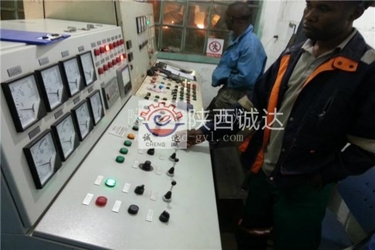
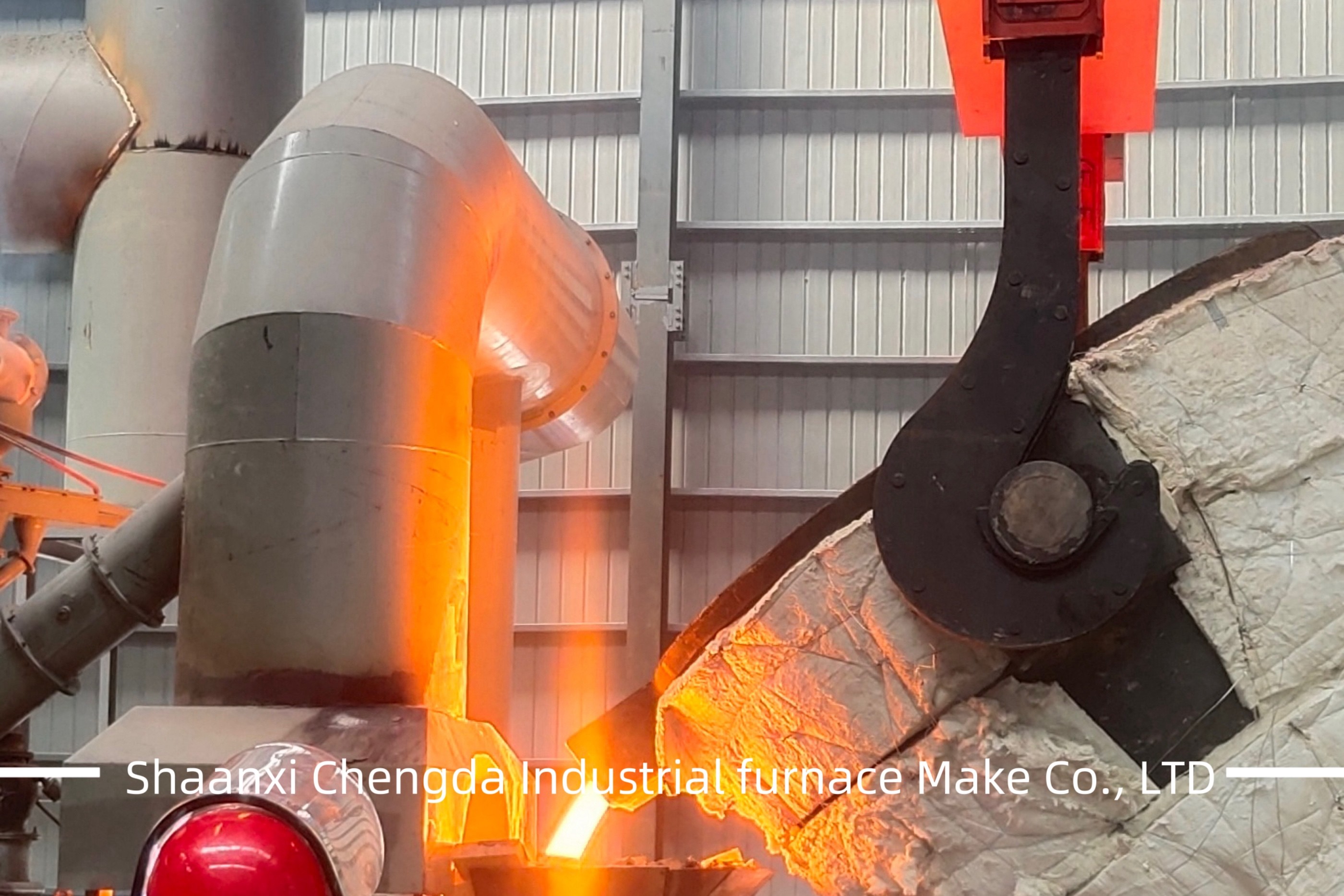
    Shaanxi Chengda Industrial Furnace Co., Ltd. completed the commissioning of electric arc furnace, the workers carefully cooperated with Chengda engineers to learn and operate the equipment, showing the deep friendship and excellent cooperation between the people of China and Pakistan.
  • Shaanxi CHENGDA Industry Furnace MAKE Co., Ltd.
    Aboubacar
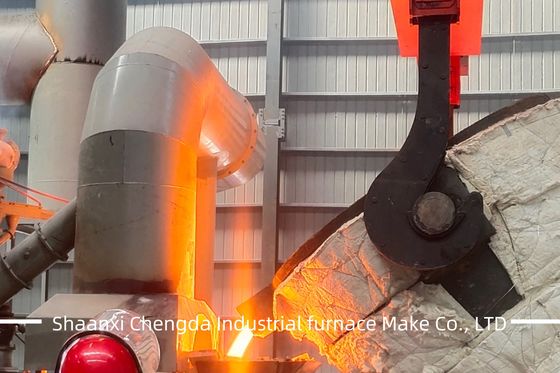
    After more than 1 month of intense production and debugging, 2 sets of heat exchange flue gas settling chamber equipment has been successfully put into operation ~ All the personnel involved in the project have worked hard! ~
  • Shaanxi CHENGDA Industry Furnace MAKE Co., Ltd.
    Ji-hwan
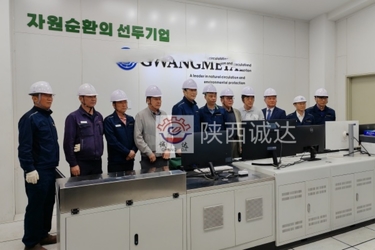
    【 Warm congratulations 】 Shaanxi Chengda Industrial Furnace Manufacturing Company in South Korea, North Chungcheong County precious metal smelting furnace equipment installation and careful manufacturing and strict commissioning, looking forward to the future in more fields to achieve mutually beneficial win-win cooperation!
Contact Person : Du
Phone Number :  13991381852

Processing chemical and new materials industrial equipment electric arc furnace
Place of Origin China
Brand Name Shaanxi Chengda
Certification ISO9001
Model Number chemical and new materials industries
Minimum Order Quantity 1 unit
Price The price will be negotiated based on the technical requirements and supply scope of Party A
Packaging Details Discuss according to the specific requirements of Party A
Delivery Time 2 months
Payment Terms L/C,T/T,Western Union,MoneyGram
Supply Ability Complete production supply chain, supply on time, and meet quality standards

Contact me for free samples and coupons.

WhatsApp:0086 18588475571

WeChat: 0086 18588475571

Skype: sales10@aixton.com

If you have any concern, we provide 24-hour online help.

x
Product Details
Product Standard Preassignable Site Address Xi 'an, China
Leaving Factory Standard Qualified Product Guarantee Period 1 Year
Highlight

Chemical Industries dc electric arc furnace

,

dc electric arc furnace Chemical Industries

,

Chemical Industries dc arc furnace

Leave a Message
Product Description

Processing of Electric Arc Furnaces for Chemical and New Materials Industry Equipment

Electric arc furnaces (EAFs) are high-temperature thermal processing equipment that generates heat through electric arcs between electrodes and materials. In the chemical and new materials industries, they are uniquely suited for high-temperature smelting, pyrolysis, reduction, and synthesis of special materials—especially those requiring ultra-high temperatures (above 1600°C) or processing under harsh conditions (e.g., reducing atmospheres, molten salt environments). Below is a detailed overview of their processing principles, core process links, key process parameters, typical application scenarios, and operational characteristics.

1. Core Processing Principle of Electric Arc Furnaces

The core of EAF processing lies in electric arc heating: three graphite (or metal) electrodes extend into the furnace chamber, and a high-voltage electric field is applied between the electrodes and the material (or between electrodes). When the voltage reaches the breakdown voltage of the air (or medium) in the furnace, a high-temperature electric arc (3000–6000°C) is generated. This arc directly radiates heat to the material, and the current passing through the molten material (or conductive medium) further generates Joule heat, realizing rapid heating and melting of the material.
Compared with resistance furnaces or induction furnaces, EAFs have an irreplaceable advantage: they can easily reach ultra-high temperatures above 2000°C, making them ideal for processing high-melting-point new materials (e.g., refractory ceramics, rare earth alloys) and special chemical reactions (e.g., high-temperature reduction of metal oxides).

2. Key Processing Links of EAFs in Chemical & New Materials Industry

The processing flow of EAFs is highly customizable according to material properties and process goals, but the typical core links are as follows:
Processing Link Core Operation Purpose
Furnace Chamber Preparation 1. Clean the furnace lining (remove residual slag/scales from the last batch);

2. Check the airtightness (for vacuum/atmosphere EAFs) and electrode wear;

3. Preheat the furnace lining (to avoid thermal shock when feeding).
Ensure no cross-contamination of materials, prevent gas leakage, and extend furnace lining life.
Material Feeding 1. Crush raw materials into uniform particles (5–50mm, depending on material density);

2. Add materials to the furnace chamber (manual feeding for small furnaces, mechanical feeding for industrial furnaces);

3. Add auxiliary media (e.g., flux to reduce melting point, inert gas to isolate oxygen) if needed.
Improve heating uniformity, reduce energy consumption, and protect materials from oxidation.
Arc Ignition & Temperature Rising 1. Lower the electrodes to a distance of 5–15mm from the material surface and apply voltage to ignite the arc;

2. Adjust electrode height and current step-by-step (avoid sudden current surges);

3. Heat at a controlled rate (5–20°C/min for brittle materials, 20–50°C/min for metal materials).
Prevent electrode damage and material cracking, and ensure stable arc combustion.
High-Temperature Processing 1. Maintain the target temperature (1600–2500°C) and hold for 0.5–4 hours (depending on reaction requirements);

2. Stir the molten material (mechanical or electromagnetic stirring) to ensure uniform composition;

3. Monitor exhaust components (for chemical synthesis) to control reaction progress.
Realize material melting, alloying, or chemical reaction, and ensure product quality.
Cooling & Discharging 1. Turn off the power and cool the furnace chamber (natural cooling or forced air cooling, depending on material);

2. When the temperature drops to 200–500°C (below the material’s brittle transition temperature), open the furnace door;

3. Discharge the product (use a crane for large ingots, manual removal for small samples).
Avoid product deformation or cracking, and ensure safe operation.
Post-Processing 1. Remove surface slag or oxide layers from the product;

2. Conduct quality testing (e.g., composition analysis via spectrometry, hardness testing);

3. Clean the furnace chamber and replace worn electrodes/lining.
Improve product purity, ensure compliance with standards, and prepare for the next batch.

3. Key Process Parameters & Control Requirements

The processing effect of EAFs depends on strict control of core parameters, especially in the chemical and new materials industries where product purity and performance are critical.
Parameter Category Key Indicators Control Requirements Impact on Products
Temperature - Heating rate: 5–50°C/min

- Holding temperature: 1600–2500°C

- Temperature uniformity: ±5–20°C
Use a dual thermocouple (K-type/R-type) for real-time monitoring; adopt PID automatic temperature control. - Too fast heating rate: Material cracking.

- Uneven temperature: Non-uniform composition of alloys/new materials.
Atmosphere - Vacuum degree: 10⁻²–10⁻⁵ Pa (for vacuum EAFs)

- Inert gas purity: ≥99.999% (e.g., Ar, N₂)

- Oxygen content: ≤100 ppm
Equip with a vacuum pump set (mechanical pump + diffusion pump) and gas purification system; install an oxygen analyzer. - High oxygen content: Oxidation of materials (e.g., rare earth elements, titanium alloys).

- Low vacuum degree: Impurity gas (e.g., H₂O, CO₂) affects chemical synthesis.
Electrode Parameters - Electrode material: Graphite (for high temperature) / tungsten (for vacuum)

- Electrode current: 500–5000 A

- Arc length: 10–30mm
Monitor electrode wear in real time (replace when wear exceeds 30%); adjust current according to temperature requirements. - Electrode breakage: Interrupts processing, causes material contamination.

- Unstable arc length: Fluctuates temperature, affects product consistency.
Processing Time - Holding time: 0.5–4 hours

- Cooling time: 2–8 hours
Set time parameters based on material thickness and reaction kinetics; avoid forced rapid cooling. - Insufficient holding time: Incomplete reaction (e.g., incomplete reduction of metal oxides).

- Too fast cooling: Product internal stress, easy cracking.

4. Typical Application Scenarios in Chemical & New Materials Industry

EAFs are widely used in the processing of high-value-added materials and special chemical reactions, mainly covering the following fields:

(1)Smelting of High-Melting-Point New Alloys

  • Materials: Tungsten-molybdenum alloys (melting point ~2800°C), niobium-titanium alloys (for superconducting materials), rare earth permanent magnet alloys (e.g., Nd-Fe-B).
  • Processing Characteristics: Use vacuum arc furnaces (VAFs) to avoid oxidation of active elements (e.g., Nd, Ti); adopt electromagnetic stirring to ensure uniform distribution of rare earth elements.
  • Application: Manufacturing of high-temperature structural parts (aerospace engines) and superconducting materials (magnetic resonance imaging equipment).

(2)Synthesis of Advanced Ceramic Materials

  • Materials: Silicon carbide (SiC) ceramics, aluminum nitride (AlN) ceramics, zirconia (ZrO₂) refractory materials.
  • Processing Characteristics: Use arc melting to realize densification of ceramic powders; add sintering aids (e.g., Y₂O₃) to reduce melting temperature.
  • Application: Production of high-temperature ceramic substrates (for new energy vehicles) and refractory linings (for chemical reactors).

(3)High-Temperature Chemical Reactions

  • Reactions: Reduction of metal oxides (e.g., TiO₂ → Ti), synthesis of molten salts (e.g., LiF-NaF-KF for nuclear reactors), pyrolysis of carbonaceous materials (e.g., coal → graphite).
  • Processing Characteristics: Control the atmosphere (e.g., hydrogen for reduction reactions) and exhaust gas composition; use a graphite crucible to avoid material contamination.
  • Application: Production of titanium sponge (for aerospace) and high-purity graphite (for semiconductor wafers).

5. Operational Advantages & Precautions

Advantages

  1. Ultra-high temperature capability: Can stably reach 2000–2500°C, meeting the processing needs of high-melting-point new materials.
  2. Flexible atmosphere control: Supports air, vacuum, and inert/reducing atmospheres, adapting to different chemical reaction requirements.
  3. High heating efficiency: Electric arc directly heats materials, with thermal efficiency 20–30% higher than resistance furnaces.

Precautions

  1. Electrode safety: Graphite electrodes are brittle and easy to break; avoid collision during lifting, and regularly check the connection tightness.
  2. Furnace lining maintenance: The lining (usually made of alumina or magnesia bricks) is prone to erosion by molten slag; replace it in time when the thickness is reduced by 50%.
  3. Gas safety: When using flammable gases (e.g., hydrogen) or toxic gases (e.g., chlorine), install a leak detection system and emergency exhaust device.
  4. Power stability: EAFs have large current fluctuations; configure a voltage stabilizer to avoid affecting the power grid and processing quality.