


All Products
-
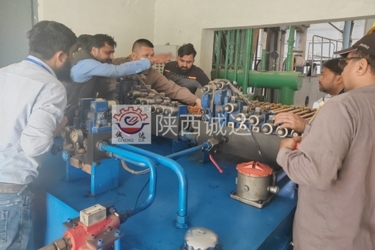 Syed Rashid Ahmed ButtShaanxi Chengda Industrial Furnace Co., Ltd. completed the commissioning of electric arc furnace, the workers carefully cooperated with Chengda engineers to learn and operate the equipment, showing the deep friendship and excellent cooperation between the people of China and Pakistan.
-
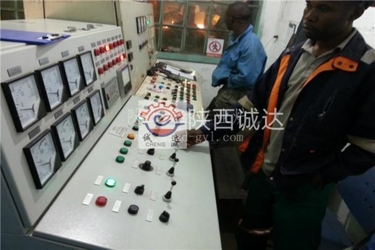 AboubacarAfter more than 1 month of intense production and debugging, 2 sets of heat exchange flue gas settling chamber equipment has been successfully put into operation ~ All the personnel involved in the project have worked hard! ~
-
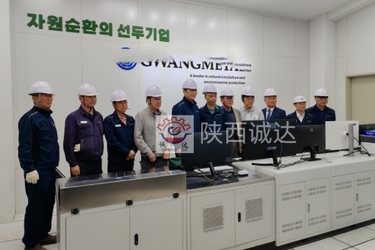 Ji-hwan【 Warm congratulations 】 Shaanxi Chengda Industrial Furnace Manufacturing Company in South Korea, North Chungcheong County precious metal smelting furnace equipment installation and careful manufacturing and strict commissioning, looking forward to the future in more fields to achieve mutually beneficial win-win cooperation!
Contact Person :
Du
Phone Number :
13991381852
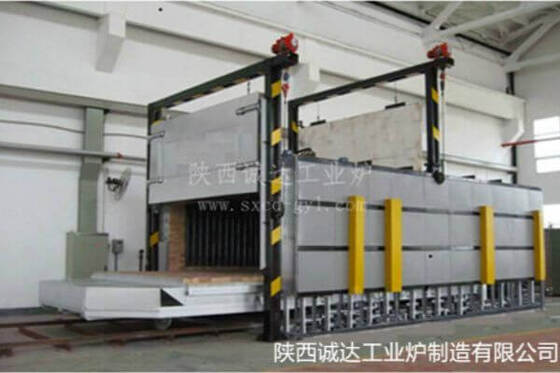
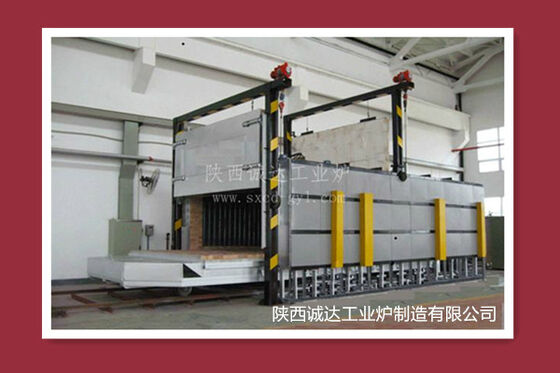
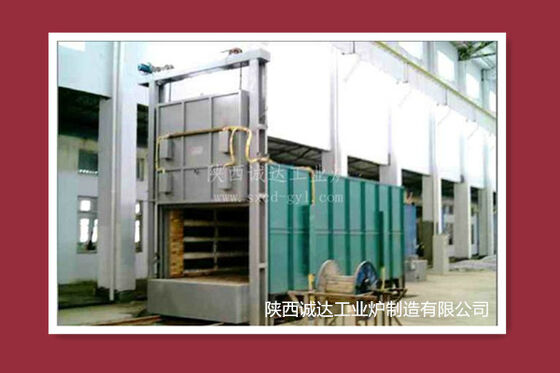
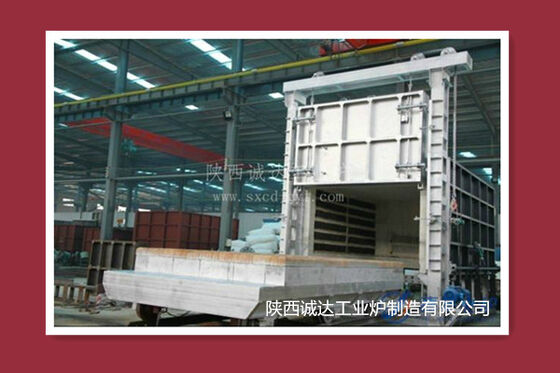
Trolley Type Heat Treatment Resistance Furnace 1250C Energy Saving Quenching Annealing Equipment


| Place of Origin | Shaanxi, China |
|---|---|
| Brand Name | SXCD |
| Certification | ISO 9001 |
| Model Number | RT2-65-12 |
| Minimum Order Quantity | 1 Set |
| Price | USD 20,000 - 150,000 per set |
| Packaging Details | Fumigation-free plywood case, steel frame, moisture barrier film, seaworthy export packing |
| Delivery Time | 2 months |
| Payment Terms | T/T |
| Supply Ability | 10 Sets per Month |
Product Details
| Rated Temperature | 1250 C | Insulation Brick Density | 0.6 G/cm3 |
|---|---|---|---|
| Heating Element | 0Cr25Al5 Or 0Cr27Al7Mo2 | Hearth Plate | Heat Resistant Steel Or Silicon Carbide |
| Control Mode | PID SCR Multi-zone | Energy Saving | 60-70% |
| Highlight | Trolley Type Heat Treatment Furnace,1250C Quenching Annealing Equipment,Energy Saving Resistance Furnace |
||
Product Description
The trolley type resistance furnace is a national-standard periodic resistance furnace engineered around an ultra energy-saving structure. A composite fibre insulation package combined with ultra-light high-strength refractory materials reduces energy consumption by 60 to 70 percent compared with conventional brick lined furnaces of the same working volume, which translates into a noticeably lower electricity bill on every batch.
The shell is welded from steel plate and structural sections, and the furnace bottom is joined to the car rail as one rigid unit. That integrated design keeps site installation simple, keeps the car travelling true during loading and unloading, and keeps daily operation easy for shift operators who are not furnace specialists.
The lining is built from 0.6 g/cm3 ultra-light insulating firebrick, backed by aluminium silicate fibre blanket in the annular gap and expanded vermiculite powder between the shell and the lining. The door mouth is protected by heavy duty impact bricks and the car deck is finished with heavy high-alumina pressure resistant bricks, so the areas that take the most abuse are also the areas that last the longest.
Key Features- Ultra-light insulation package: 0.6 g/cm3 insulating firebrick with fibre blanket and vermiculite backfill keeps shell temperature low and cuts heat storage losses on every cycle.
- Helical heating elements: 0Cr25Al5 or 0Cr27Al7Mo2 resistance wire formed into spirals and carried on side brick ledges and the car masonry, rated for continuous service up to 1250 C.
- Protected door and hearth: impact bricks at the door opening plus a chrome-manganese-nitrogen heat resistant steel hearth plate or a 1200 C silicon carbide plate to carry heavy workpieces.
- Double sealed car: the car uses a double layer seal and an integrated rail joint, minimising heat leakage at the floor line where most periodic furnaces lose energy.
- Multi-zone heating: large furnaces use several independently controlled zones with elements on the door and the rear wall, holding temperature uniformity across the full load.
- Service friendly design: element grooves stay accessible, so the weekly compressed air blow-off of oxide scale under the hearth plate can be completed quickly without dismantling the lining.
| Parameter | Specification |
|---|---|
| Rated temperature | 1250 C maximum continuous working temperature |
| Heating element material | 0Cr25Al5 or 0Cr27Al7Mo2 helical resistance elements |
| Insulation structure | 0.6 g/cm3 light firebrick, aluminium silicate fibre blanket, vermiculite backfill |
| Energy saving | 60-70% compared with conventional brick lined periodic furnaces |
| Hearth plate | Chrome-manganese-nitrogen steel or 1200 C silicon carbide plate |
| Temperature uniformity | Multi-zone control, typically within +/- 10 C at working temperature |
| Control system | PID SCR closed loop with programmable temperature curve and over-temperature alarm |
| Power supply | Three phase 380 V 50 Hz, ratings configured to the required charge weight |
| Car drive | Motorised trolley with integrated rail joint and double layer seal |
| Loading options | Manual or hydraulic charging, crane loaded baskets and fixtures |
The furnace is used for quenching, annealing, normalising, tempering and ageing of high-chromium and high-manganese steel castings, ductile iron parts, mill rolls, grinding balls, crusher hammers and wear resistant liners. It also handles general machine components that need a controlled heating and cooling cycle, such as forged blanks, gear blanks, shafts and tooling.
Because the whole charge is loaded on the car and rolled into the chamber, awkward and heavy workpieces are handled far more safely than on a fixed hearth furnace. Heat treatment shops, foundries, cement and mining equipment plants and machinery repair works all use this layout to combine heavy load capability with a short, repeatable cycle.
Packaging & Quality AssuranceThe furnace body, car, control cabinet and brick sets are packed separately in fumigation-free plywood cases with moisture barrier film, fixed on steel frames and braced for container transport. Fragile elements are boxed individually and clearly marked.
Every unit is pre-assembled and electrically tested before shipment, and the documentation package includes foundation drawings, element layout, wiring diagrams and the operating manual. Our engineers support foundation checks, installation, commissioning and operator training on site, and spare elements, hearth plates and control modules are held ready for fast dispatch.
Recommended Products
