• Shaanxi CHENGDA Industry Furnace MAKE Co., Ltd.
    Syed Rashid Ahmed Butt
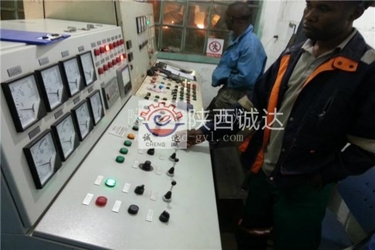
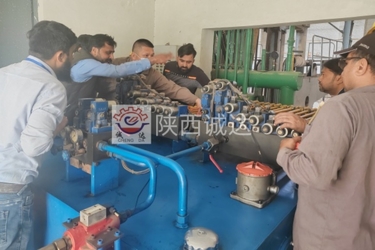
    Shaanxi Chengda Industrial Furnace Co., Ltd. completed the commissioning of electric arc furnace, the workers carefully cooperated with Chengda engineers to learn and operate the equipment, showing the deep friendship and excellent cooperation between the people of China and Pakistan.
  • Shaanxi CHENGDA Industry Furnace MAKE Co., Ltd.
    Aboubacar
    After more than 1 month of intense production and debugging, 2 sets of heat exchange flue gas settling chamber equipment has been successfully put into operation ~ All the personnel involved in the project have worked hard! ~
  • Shaanxi CHENGDA Industry Furnace MAKE Co., Ltd.
    Ji-hwan
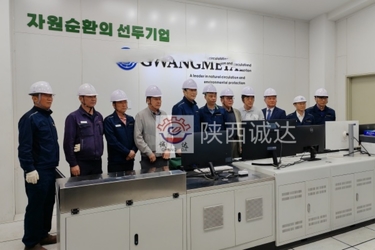
    【 Warm congratulations 】 Shaanxi Chengda Industrial Furnace Manufacturing Company in South Korea, North Chungcheong County precious metal smelting furnace equipment installation and careful manufacturing and strict commissioning, looking forward to the future in more fields to achieve mutually beneficial win-win cooperation!
Contact Person : Du
Phone Number :  13991381852

Shaanxi Chengda Type Tubular Water Cooling Furnace Cover for Industrial

Place of Origin Shaanxi, China
Brand Name Shaanxi Chengda
Certification ISO9001
Model Number water cooling furnace cover
Minimum Order Quantity 1set
Price Price and specific model specifications can be agreed upon.
Packaging Details Discuss according to the specific requirements of Party A
Delivery Time 2~3 months
Payment Terms L/C,D/A,D/P,T/T,Western Union,MoneyGram
Supply Ability Complete production supply chain, supply on time, and meet quality standards

Contact me for free samples and coupons.

WhatsApp:0086 18588475571

WeChat: 0086 18588475571

Skype: sales10@aixton.com

If you have any concern, we provide 24-hour online help.

x
Product Details
Brand Title Shaanxi Chengda Application Electric Arc Furnace、Burried Arc Furnace
Country Of Origin Shaanxi, China Factory Configuration New
Highlight

Industrial Water Cooling Furnace Cover

,

Industrial Tubular Water Cooling Furnace Cover

Leave a Message
Product Description

New type tubular water cooling furnace cover


Type Tubular Water Cooling Furnace Cover for Electric Arc Furnace

The Tubular Water Cooling Furnace Cover for Electric Arc Furnace (EAF) is a specialized variant of EAF water-cooled covers, characterized by its core heat-dissipating structure—arranged metal tubes (tubular bundles) instead of integral hollow panels. This design optimizes heat exchange efficiency, enhances structural rigidity, and simplifies maintenance, making it particularly suitable for medium-to-large EAFs (e.g., 50-200t steelmaking EAFs, high-power ferroalloy refining EAFs) that face intense arc radiation and frequent thermal shocks.

1. Core Design Features & Working Principle

Key Design Characteristics

Compared to panel-type water-cooled covers, the tubular structure offers unique advantages tailored to EAF operating conditions:
  • Tubular Heat-Dissipating Core: The cover’s inner heat-absorbing layer consists of seamless steel tubes or stainless steel tubes (arranged in parallel, spiral, or grid patterns). This design increases the heat exchange area (30-50% larger than panel-type covers) and ensures uniform cooling, avoiding local hot spots caused by concentrated arc heat.
  • Modular Tube Bundles: Tubes are grouped into removable modular bundles (e.g., 3-5 tubes per module). If individual tubes are damaged (e.g., by molten splashes), only the affected module needs replacement—reducing maintenance time and cost (vs. replacing the entire panel in panel-type covers).
  • Reinforced Frame Integration: Tubes are welded or bolted to a high-strength steel frame (Q355B or 16Mn), forming a rigid structure that resists deformation from thermal expansion (critical for EAFs that require frequent cover lifting/tilting).
  • Optimized Sealing at Electrode Holes: The tubular structure around electrode holes uses double-layer tube rings (inner tube for cooling, outer tube for fixing high-temperature gaskets), enhancing sealing performance and preventing furnace gas leakage at this high-wear area.

Working Principle

It follows the closed water circulation principle but with enhanced heat transfer efficiency due to the tubular design:
  1. Low-temperature cooling water (30-40°C, softened/demineralized to avoid scaling) is distributed to each tubular bundle via a header pipe (installed on the cover’s outer frame).
  2. Water flows through the tubes, absorbing heat from high-temperature furnace gas (1600-2200°C) and arc radiation—heat transfer occurs directly through the tube walls (thinner than panel layers, improving heat conduction).
  3. Heated water (55-60°C) converges in a return header, is sent to a heat exchanger/cooling tower for temperature reduction, and is recycled back to the cover—forming a continuous, high-efficiency heat dissipation cycle.

2. Material Selection for Key Components

Material choice is critical to withstand EAF-specific challenges (high temperature, corrosion from acidic furnace gas, molten slag erosion). The table below details materials for core parts:
Component Function Common Materials Reason for Selection
Cooling Tubes Core heat exchange element - Carbon steel: Seamless 20# steel (Φ38×5mm, Φ57×6mm)

- Stainless steel: 316L (for corrosive conditions, e.g., ferrochrome refining)
20# steel: High thermal conductivity (50.2 W/(m·K)), cost-effective; 316L: Resists corrosion from Cr-rich slag/SO₂ furnace gas
Header Pipes Distribute/collect cooling water 20# steel seamless pipes (Φ108×8mm, Φ133×10mm) High pressure resistance (withstands 0.8-1.0 MPa cooling water pressure), easy welding to tubes
Cover Frame Support tubular bundles, connect lifting mechanisms Q355B low-alloy steel (thickness 14-18mm) High tensile strength (≥345 MPa), good resistance to thermal fatigue (avoids deformation from repeated heating/cooling)
Electrode Hole Sleeves Protect tubes around electrode holes from wear Heat-resistant alloy steel (H13) or 310S stainless steel H13: Resists abrasion from electrode movement; 310S: Withstands 1200°C+ local temperature
Sealing Gaskets Prevent furnace gas leakage High-temperature graphite packing (withstand 1000°C) + ceramic fiber gaskets Graphite: Good sealing performance under thermal expansion; ceramic fiber: Compensates for frame deformation

3. Key Technical Parameters (Typical for 100t Steelmaking EAF)

Parameters are customized based on EAF capacity, power, and smelting process (e.g., ultra-high power (UHP) steelmaking, ferroalloy refining). Below are representative specifications for a 100t UHP EAF:
Parameter Category Specific Indicators Typical Values
Tubular Structure Tube material & specification

Tube arrangement

Number of tube bundles

Heat exchange area
20# steel, Φ57×6mm

Grid pattern (spacing 180mm)

6 bundles (5 tubes/bundle)

12-15 m²
Cooling System Inlet water temperature

Outlet water temperature

Water pressure

Total water flow rate
≤40°C

≤60°C

0.6-0.8 MPa

140-160 m³/h
Operational Performance Maximum withstand temperature (tube inner wall)

Heat dissipation coefficient

Furnace gas leakage rate

Service life
2200°C

≤100 W/(m²·K)

≤0.05%

3-5 years
Mechanical Parameters Cover weight

Lifting speed

Locking pressure

Maximum tilt angle (with EAF)
10-12 tons

1.0-1.2 m/min

0.15-0.2 MPa

±15°

4. Application Advantages & Suitable EAF Scenarios

Core Application Advantages

Compared to panel-type water-cooled covers and traditional refractory covers, the tubular design offers targeted benefits for EAF operations:
  1. Higher Heat Exchange Efficiency: The increased tube surface area reduces outlet water temperature by 5-10°C (vs. panel-type covers), lowering cooling system load and saving energy.
  2. Stronger Thermal Shock Resistance: Tubes have better flexibility than rigid panels, absorbing thermal expansion/contraction without cracking—critical for EAFs that undergo frequent heating (smelting) and cooling (charging/tapping) cycles.
  3. Lower Maintenance Cost: Modular tube bundles allow partial replacement (costing 10-20% of full cover replacement) and faster repair (1-2 hours vs. 8-12 hours for panel-type covers).
  4. Better Adaptability to Large EAFs: The rigid tubular-frame structure supports larger cover sizes (e.g., 5-6m diameter for 200t EAFs) without deformation, which panel-type covers struggle to achieve.

Suitable EAF Scenarios

It is most effective in EAFs with high heat intensity and frequent operational adjustments:
  • Ultra-High Power (UHP) Steelmaking EAFs (50-200t): Handles intense arc heat (2000-2200°C) and frequent cover lifting for scrap charging; CO recovery rate ≥98% due to good sealing.
  • High-Power Ferroalloy Refining EAFs (e.g., low-carbon ferrochrome, ferrosilicon): Resists corrosion from chrome/manganese-rich slag (with 316L tubes) and reduces alloy loss via stable temperature control.
  • Medium-Sized Non-Ferrous Smelting EAFs (e.g., copper/nickel alloy): Modular design simplifies maintenance in smelting processes with frequent slag cleaning.

5. Daily Maintenance & Fault Prevention

To maximize service life and avoid safety risks (e.g., tube rupture leading to water leakage into the furnace), strict maintenance is required:

Routine Maintenance (Per Shift)

  1. Tube & Header Inspection: Check for water leakage at tube joints and headers using a pressure gauge—pressure drops ≥0.05 MPa indicate potential leaks.
  2. Temperature Monitoring: Use an infrared thermometer to scan tube surfaces; local temperatures >100°C suggest tube blockage (due to scaling or slag adhesion).
  3. Electrode Hole Sealing Check: Inspect graphite packing for wear; replace if furnace gas leakage (detected by a CO detector) exceeds 0.05%.
  4. Lifting Mechanism Lubrication: Apply high-temperature molybdenum disulfide grease to hinges and hydraulic cylinders to prevent jamming during cover movement.

Common Faults & Solutions

Fault Phenomenon Possible Cause Solution
Tube blockage (local overheating) Scaling inside tubes (hard water) or slag adhesion 1. Flush tubes with 8-10% hydrochloric acid (descaling); 2. Use high-pressure water jets to remove slag.
Water leakage at tube joints Weld fatigue (thermal expansion) or loose bolts 1. Stop the furnace, drain water, and re-weld leaking joints; 2. Tighten bolts with torque wrenches.
Electrode hole gas leakage Worn graphite packing or sleeve deformation 1. Replace graphite packing; 2. Straighten or replace deformed H13 sleeves.
Header pipe corrosion Cooling water pH imbalance (too acidic/alkaline) 1. Test water pH (maintain 7.5-8.5); 2. Add corrosion inhibitors; 3. Replace severely corroded headers.


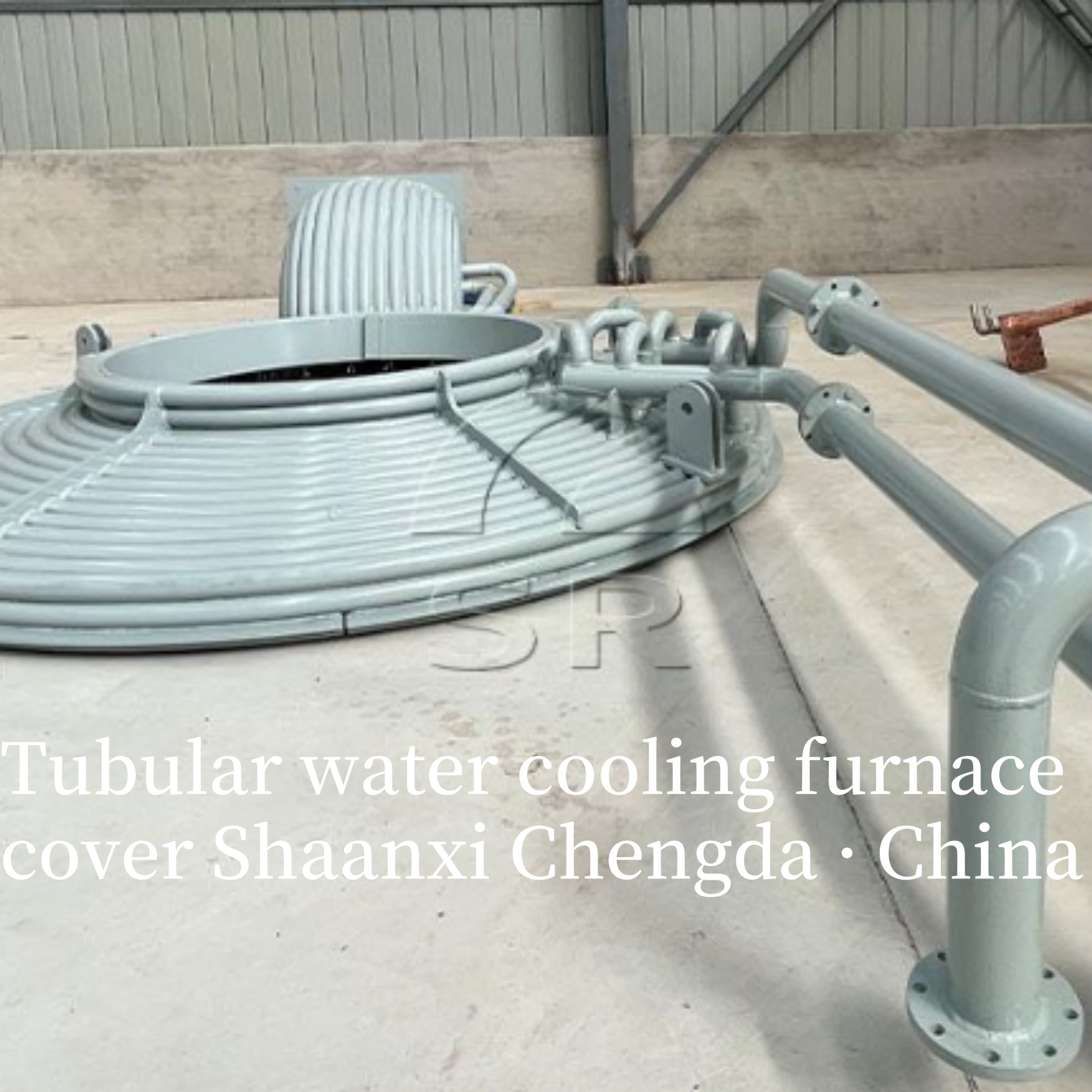
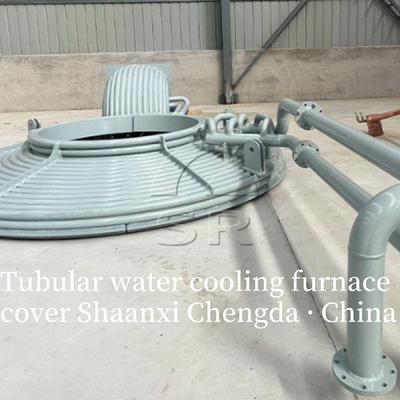
  The water cooling structure in the furnace cover is composed of a number of tightly arranged seamless pipes.

  Each steel pipe is round. The water-cooled furnace cover of this structure is not easy to leak and easy to maintain.


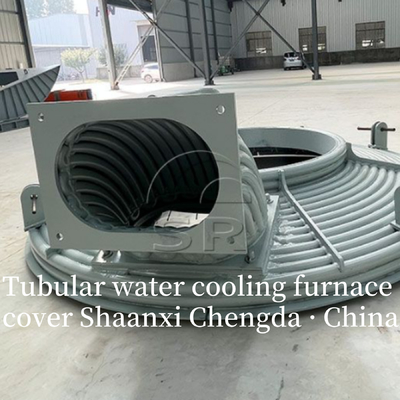
  The water cooled furnace cover of electric arc furnace adopts tubular frame water cooled furnace cover, and the water cooled cover is designed in two halves for easy replacement and transportation.

  The water-cooled furnace cover comprises a tubular frame, a water cooling fast on the left half cover, a water cooling fast on the right half cover, a lime charging device, and a water-cooling support ring on the central small furnace cover. The tubular frame is made of seamless steel pipes, which are not only used as the strength requirements of the structural parts, but also as the main inlet and return water pipes. Connect all cooling water circuits through the main inlet and return pipes. The left and right half water cooling blocks are connected to the frame by bolts, and the water cooling fast forward and return water are connected to the main inlet and return water pipes by branch steel pipes to cool the two half water cooling blocks.


  The lime charging device is installed on the furnace water cooling cover. The device is composed of a receiving hopper, a chute, etc. The lower part of the chute is designed as a water cooling structure. When no lime is added, the sluice valve is closed to prevent the flue gas from overflowing from the lime charging device.

  The water-cooled support ring of the central small furnace cover is made into an inverted cone structure, and water cooling is also adopted. The water inlet and return pipes are connected to the main water inlet and return pipes.


Partial plane diagram of tubular water-cooled furnace cover:


Shaanxi Chengda Type Tubular Water Cooling Furnace Cover for Industrial 0