


All Products
-
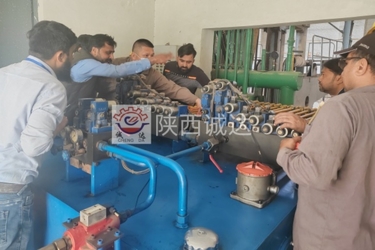 Syed Rashid Ahmed ButtShaanxi Chengda Industrial Furnace Co., Ltd. completed the commissioning of electric arc furnace, the workers carefully cooperated with Chengda engineers to learn and operate the equipment, showing the deep friendship and excellent cooperation between the people of China and Pakistan.
 -
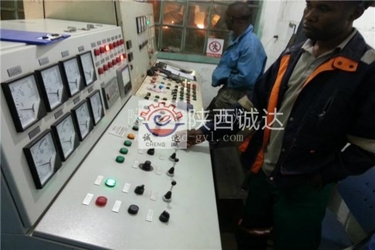 AboubacarAfter more than 1 month of intense production and debugging, 2 sets of heat exchange flue gas settling chamber equipment has been successfully put into operation ~ All the personnel involved in the project have worked hard! ~
 -
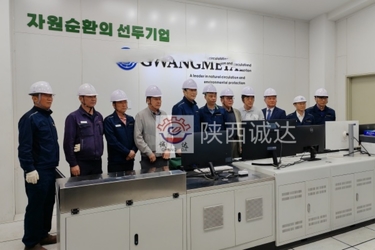 Ji-hwan【 Warm congratulations 】 Shaanxi Chengda Industrial Furnace Manufacturing Company in South Korea, North Chungcheong County precious metal smelting furnace equipment installation and careful manufacturing and strict commissioning, looking forward to the future in more fields to achieve mutually beneficial win-win cooperation!
Contact Person :
Du
Phone Number :
13991381852
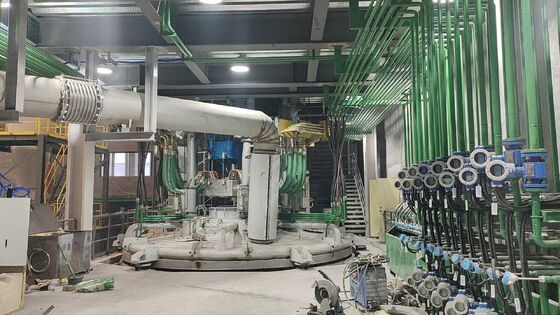
Fly Ash Rock Wool Electric Furnace
| Place of Origin | China |
|---|---|
| Brand Name | Shaanxi Chengda |
| Certification | ISO 9001 |
| Model Number | Negotiate based on equipment processing capacity |
| Minimum Order Quantity | 1 unit |
| Price | The price will be negotiated based on the technical requirements and supply scope of Party A |
| Packaging Details | Discuss according to the specific requirements of Party A |
| Delivery Time | 2 months |
| Payment Terms | L/C,T/T,Western Union |
| Supply Ability | Complete production supply chain, supply on time, and meet quality standards |
Product Details
| Highlight | fly ash rock wool furnace,electric furnace for hazardous waste,solid waste treatment furnace |
||
|---|---|---|---|
Product Description
Introduction to Fly Ash Rock Wool Electric Furnace
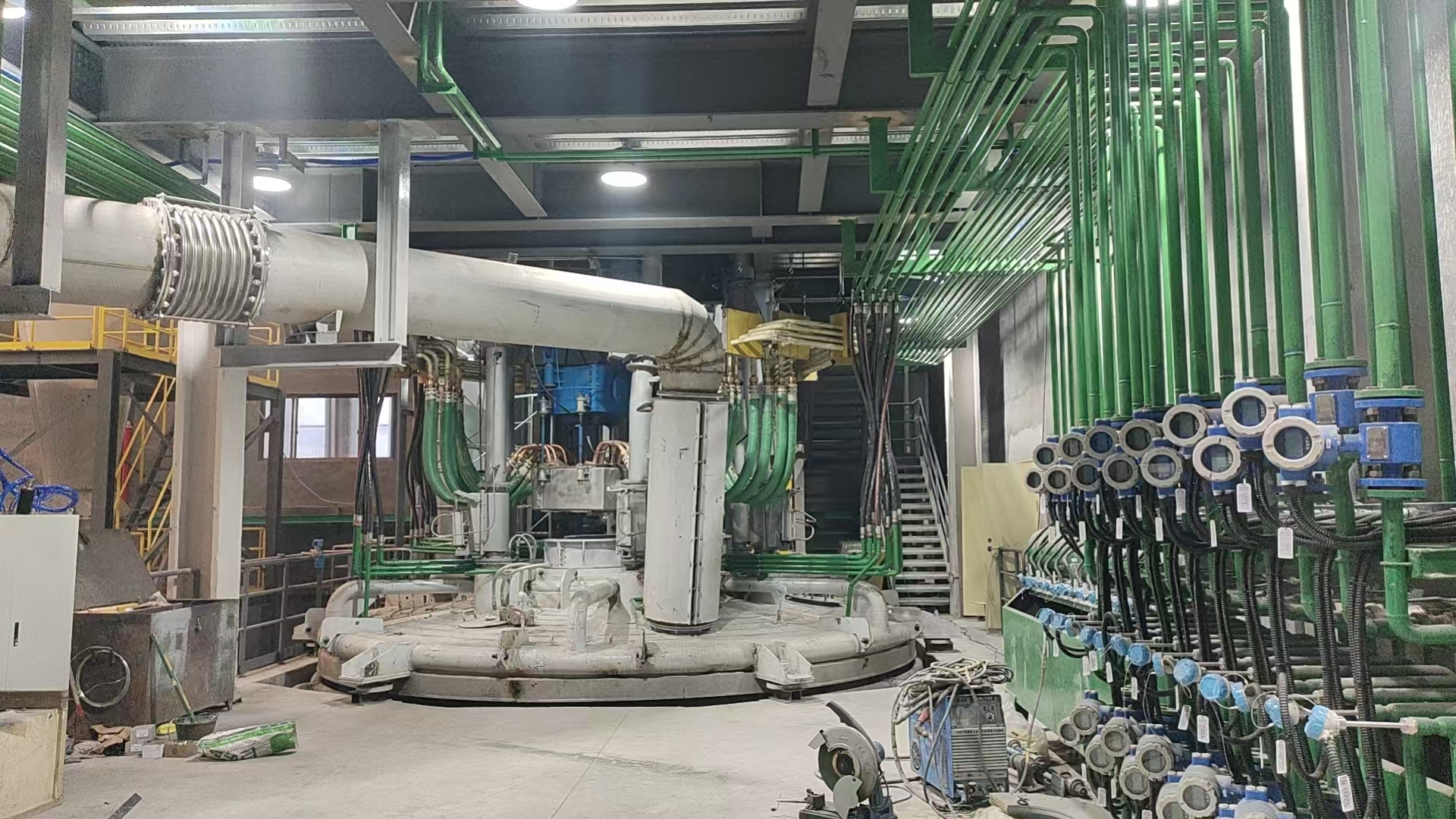
Fly Ash Rock Wool Electric Furnace is a specialized submerged‑arc electric melting furnace designed for high‑temperature vitrification of municipal solid waste incineration fly ash and production of high‑quality rock wool insulation materials. It converts hazardous fly ash into value‑added rock wool via electric heating, achieving harmless disposal and resource recycling simultaneously.
Core Working Principle
- Raw Material Preparation: Fly ash is mixed with modifiers (e.g., lime, feldspar) to adjust acidity coefficient (1.5–2.0) and melt viscosity.
- Electric Melting: Three‑phase AC or DC power generates submerged arcs, heating the furnace to 1,350–1,550°C to fully melt the mixture into homogeneous molten slag.
- Vitrification & Purification: High temperature decomposes dioxins (destruction rate >99.99%) and stabilizes heavy metals in the glassy phase.
- Fiber Formation: Molten slag flows continuously to a centrifuge at 3.3–4.0 t/h to form rock wool fibers.
Main Structure
- Furnace Body: Steel shell with high‑purity MgO‑C refractory lining, resistant to high temperature and corrosive slag.
- Electrode System: 3 graphite electrodes (φ400–600 mm) with automatic lifting; powered by a dedicated transformer.
- Power Supply: Transformer capacity 3,000–10,000 kVA (common: 5,000–7,500 kVA).
- Tilting & Tapping: Hydraulic tilting (max 45°) and bottom tapping for continuous slag discharge.
- Control System: PLC/DCS for automatic temperature, power, and flow regulation.
- Auxiliary Systems: Dust collection, waste heat recovery, and flue gas treatment.
Typical Technical Parameters
| Parameter | Common Range | Typical 7,500 kVA Furnace |
|---|---|---|
| Transformer Capacity | 3,000–10,000 kVA | 7,500 kVA |
| Furnace Shell ID | φ5,200–6,500 mm | φ6,200 mm |
| Melting Temperature | 1,350–1,550°C | 1,450°C |
| Molten Slag Flow Rate | 3.3–4.0 t/h | 3.8 t/h |
| Slag Acidity Coefficient | 1.5–2.0 | 1.8±0.3 |
| Smelting Cycle | Continuous operation | >8,000 hours/year |
| Hourly Output (Rock Wool) | 4–6 t/h | 5.5 t/h |
| Annual Capacity | 30,000–50,000 t | 45,000 t |
| Unit Power Consumption | 300–400 kWh/t | 350 kWh/t |
| Electrode Consumption | 1.5–2.5 kg/t | 2.0 kg/t |
| Dioxin Destruction Rate | >99.99% | >99.99% |
| Carbon Reduction | ~245 kg CO₂/t | ~245 kg CO₂/t |
Product Specifications (Rock Wool)
| Item | Standard |
|---|---|
| Density | 60–150 kg/m³ |
| Thermal Conductivity | ≤0.044 W/(m·K) |
| Acidity Coefficient | ≥1.8 |
| Fiber Diameter | ≤7.0 μm |
| Fire Resistance | Non‑combustible (Class A) |
| Heavy Metal Leaching | Meets GB/T 41015–2021 |
Key Advantages
- Harmless Disposal: Destroys dioxins and stabilizes heavy metals, fully complying with fly ash treatment standards.
- Resource Recycling: Converts hazardous waste into high‑value insulation material.
- Energy Efficient: Electric heating reduces energy consumption by >40% vs. coke‑fired cupolas.
- Stable Quality: Precise temperature control ensures uniform fiber properties.
- Low Emission: Near‑zero dust and flue gas pollution.
- Long Service Life: Continuous operation >8,000 hours annually.
Typical Application Process
- Batching: Fly ash + modifiers → proportioning and mixing.
- Charging: Continuous feeding into the electric furnace.
- Melting: Submerged‑arc heating to form molten slag.
- Refining: Slag homogenization and impurity removal.
- Fiberization: Slag → centrifuge → rock wool fibers.
- Post‑Treatment: Cooling, curing, and cutting into finished products.
Applications
- Waste Treatment: Harmless disposal of municipal solid waste incineration fly ash.
- Building Insulation: High‑performance rock wool for walls, roofs, and pipelines.
- Industrial Insulation: High‑temperature insulation for furnaces and equipment.
Recommended Products
